






Four tips for using AI in financial planning
Artificial intelligence (AI) is everywhere, yet most of us primarily use it for internet searches.¹ Although it can do much more, AI still has some weaknesses that you should be aware of before relying on it to help make informed decisions about your money and personal information. If you’re thinking about using AI to help you with financial planning, there are a few things you should know about using it safely and smartly.

How can AI help with financial planning?
AI tools can help improve your financial literacy and make it easier to stay on top of your finances by offering assistance with tasks like :
- Creating a budget
- Suggesting retirement plan contribution and savings rates
- Tracking your expenses and analyzing spending habits
- Determining how much risk someone is willing to take with investments
- Monitoring transactions to detect possible fraud
- Providing education information on financial topics
- Answering common financial questions, such as eligibility ages for Social Security
Tips for using AI tools
While helpful, AI tools also come with potential pitfalls and must be used responsibly. Keep these four tips in mind:
1 Check for accuracy
Sometimes AI can give wrong answers. The answers you get may change depending on how a question is asked, and it may make assumptions about missing information. So always use the information from AI as a starting point for research and make sure it makes sense to you.
2 Use your own judgment
AI can offer suggestions, but your personal goals, circumstances, and comfort level matter more. Think of AI as support—not a replacement for your own decision-making.
3 Consider the source
Not all AI information is reliable. Some content may be biased, outdated, or missing proper references. Your AI answer should include the source of the information it used, so double-check where it came from and only rely on trusted and recent sources.
4 Don’t give AI personal information
Anything you put into AI can be seen by anyone, opening you up to the potential for identity theft. Never share your personal or financial information when using an AI tool.
Pros and cons of AI in retirement planning
| Pros | Cons |
Makes it easy to get quick answers to simple questions | Can’t fully understand your unique situation or provide deeply personalized advice |
Offers personalized results based on the information you share | May not protect the information you enter into the tool |
Quickly calculates numbers such as how much to save or how long it may take to reach a goal | Lacks human interaction and emotional support |
Keeps track of savings and investments | Makes mistakes |
Analyzes market and economic trends | Doesn’t replace the advice of family, friends, or financial professionals |
How people feel about AI in financial planning
Research from the MIT AgeLab shows that many people are still unsure about trusting AI with their personal finances. Most are more comfortable using AI to help build a plan than letting it fully manage their retirement savings. Trust matters in finance, and humans still play a big role.
Consumer willingness to use AI in financial tasks
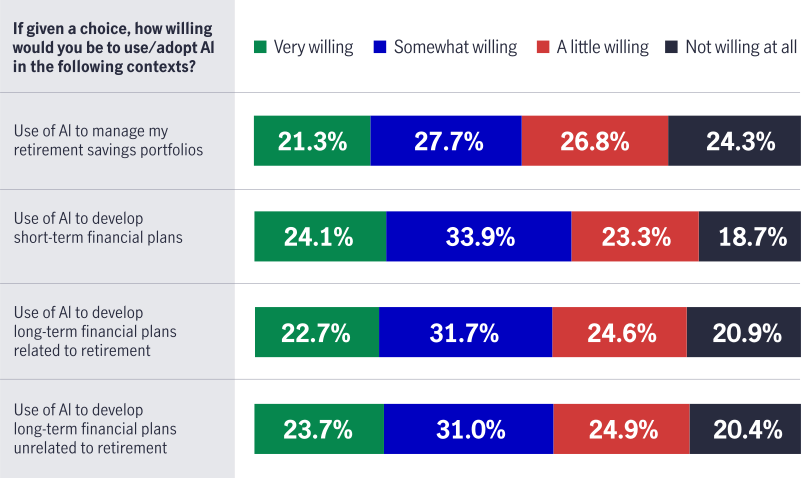
Source: MIT AgeLab, 2023.
Consumer willingness to use robo-advisors
Sentiment based on a scale of 1 to 4, with 1 meaning "not at all willing" and 4 meaning "very willing"
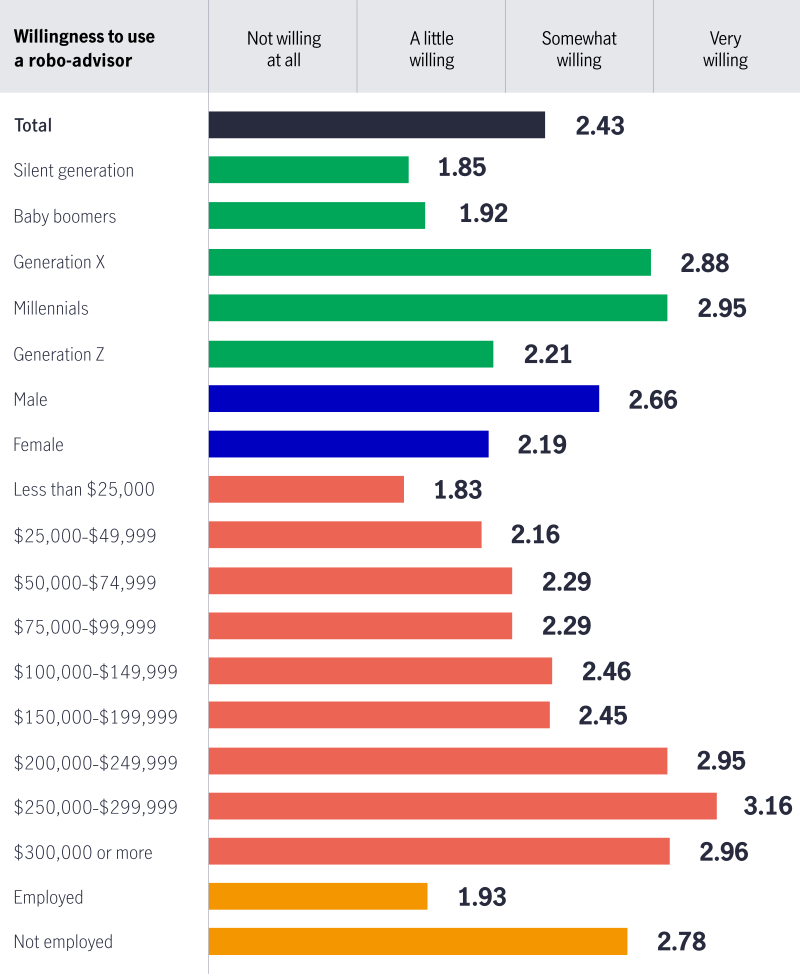
Source: MIT AgeLab, 2023.
Using AI in financial planning
AI can be a helpful tool for getting started with financial planning—but it should not be used as a replacement for your own judgment or professional advice. And make sure when you ask for guidance, you don’t include any personal information. Understanding both the benefits and the limitations can help you decide when AI is useful and when a human touch would be better.
FAQs
How can you use AI in financial planning?
AI can speed up and personalize financial planning by analyzing your spending, spotting trends, and modeling different scenarios. It also simplifies complex data and delivers quick, easy-to-understand insight to help you make more confident decisions.
Can AI help beginners make financial decisions?
AI can be a great starting point for beginners because it can break down complex financial topics and offer suggestions. While it doesn’t replace personalized advice, it can give you clear, easy-to-understand guidance so you can make more informed decisions.
What are the risks of using AI for investing?
The risks of using AI for investing are that responses may misinterpret data, react too quickly to market changes, or give recommendations that don’t fit your personal goals. That’s why it’s important to use AI as a tool and pair it with your own judgment or professional guidance. Another risk is the potential for identity theft if you were to include personal information, so keep your questions general and don’t include anything that could identify you.
1 “What CR Found Surveying Americans about Generative AI,” Innovation at Consumer Reports, Consumer Reports, 4/4/2024. 2 2024 financial resilience and longevity survey, John Hancock Retirement, 11/1/2024.
How can we make a longer retirement better?
Longevity is about balancing health and wealth to help make those extra years better. The implications are shifting the way we think about retirement.
Important disclosures
Important disclosures
John Hancock is not affiliated with the Massachusetts Institute of Technology (MIT) AgeLab, and neither is responsible for the liabilities of the other.
The content of this document is for general information only and is believed to be accurate and reliable as of the posting date, but may be subject to change. It is not intended to provide investment, tax, plan design, or legal advice (unless otherwise indicated). Please consult your own independent advisor as to any investment, tax, or legal statements made.
MGR0326265202144