





Putting healthy aging on the retirement planning agenda
Most Americans agree that good health is key to independence and quality of life as they age, but our research suggests they rarely plan for it in the same way they plan for their finances.¹ As a plan sponsor, you’re in a unique position to change that. We’ll explore how everyday choices and workplace support shape healthy aging and offer practical steps you can take to help employees build both financial and health assets for a longer, better retirement.

Key takeaways
|
Healthy aging starts with everyday choices—and workplace support
While some factors that affect healthy aging, such as genetics or accidents, are beyond our control, many are not. The good news is that many of the things that support healthy aging are within our control and can be influenced by the choices we make every day.
Our research with the MIT AgeLab on the Longevity Preparedness Index looked at what it takes to be ready for a longer life. It goes beyond financial readiness by examining eight dimensions of aging well and highlighting health as a foundation for long-term well-being. The findings show that physical, mental, cognitive, and behavioral health play an important role in maintaining quality of life as we age.1
Based on these insights, we identified six key behaviors that can support healthy aging—and they’re also beneficial to health in the short term. Forming healthy habits earlier in life can improve quality of life in later years. Offering support through your employee benefits program to encourage healthy behaviors can make a real difference in how employees age and how prepared they are for retirement.
Health behaviors linked to long-term quality of life
Health behavior | Short-term benefits | Long-term benefits |
Physical activity | Boost energy, reduce stress, and minimize fatigue | Lower the risk of chronic diseases and maintain independence |
Nutrition | Improve focus and day-to-day performance | Preserve muscle strength and physical function |
Sleep | Enhance attention, memory, and decision-making | Reduce the risk of disease, disorders, depression, and anxiety |
Cognitive fitness | Sharpen thinking, problem-solving, and information processing | Slow cognitive decline and extend independent living |
Emotional wellness | Elevate mood and manage stress better | Strengthen emotional resilience and reduce depression and anxiety |
Stress regulation | Prevent headaches, irritability, digestive issues, and other symptoms | Reduce chronic inflammation, lower the risk of stress-related diseases, and improve the ability to cope with age-related stressors such as illness, loss, and isolation |
How health and longevity affect retirement planning
Our research also examined the health challenges of longevity and showed a gap between what people know and what they do.
People value health, but aren’t fully prepared
Americans consider health the most important factor in how well they’ll live as they age, and many are trying to do the right things. But there’s still a big gap between the healthy future they want and the one they’re likely to experience.
- Survey respondents considered health the most important part of longevity preparedness
- But the average health preparedness score was just 56 out of 1001
Tip: Make health a visible topic at work and use everyday conversations to connect employees to relevant benefits and programs.
Awareness is high, but action often falls short
Most people understand that healthy behaviors are critical to aging well, but daily routines and competing demands often get in the way.
- 74% said exercise and nutrition have a very strong or extremely strong influence on quality of life in older age
- Yet less than half were physically active three or more times in the past week, and 57% rated their sleep quality as terrible, poor, or fair
Tip: Help employees turn good intentions into realistic plans. Offer simple worksheets or digital tools that prompt them to consider how their health might change over time and to set specific, attainable goals.
Midlife is the moment that matters
People in midlife—often the core of your workforce—are the least likely to say they’re assessing their health and taking action. Career pressure, caregiving, and limited time push well-being aside, even though the habits formed in our 40s and 50s shape health for decades.
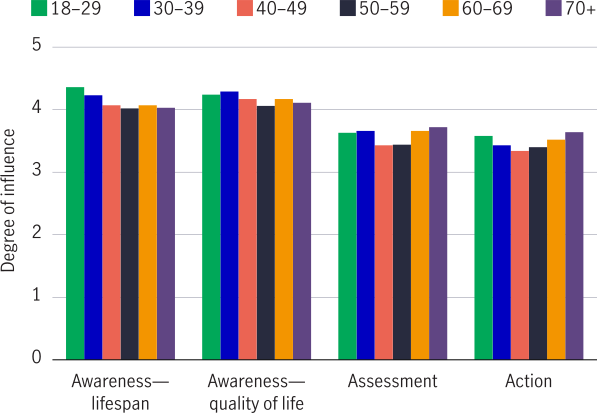
- People ages 40–60 reported the lowest levels of assessment and action around exercise and nutrition
Health matters at every age
This chart shows how people perceive the impact of regular exercise and good nutrition on quality of life in older age. It highlights how strongly individuals believe that healthy habits today influence their well-being and independence in retirement years.
(1—Not at all influential, 2—Slightly influential, 3—Moderately influential, 4—Very influential, 5—Extremely influential)
Tip: Design benefits campaigns and programs to target midlife employees with flexible, easy-to-use options that fit around work and caregiving demands. Consider short on-site or virtual sessions with financial advisors and other local experts who can help them identify healthy behaviors and make health-related decisions.
Four ways plan sponsors can support employee health and longevity
You have a strategic opportunity to help employees close the gap between awareness and action—and raise health preparedness scores. By making health part of retirement planning, benefits, and wellness programs, you can help employees build and sustain the habits that support healthy aging.
Put health on the retirement planning agenda
The health of your employees today shapes their quality of life now and in retirement. Ask your financial professional or retirement plan provider to include health topics in retirement education alongside savings and investments. You can also prompt employees to set a few simple, long-term health goals at the same time they set financial goals.
Normalize conversations about health
Most retirement conversations focus only on money, leaving out other critical topics, such as health. You can work with your financial professionals to add basic health questions into retirement and financial wellness meetings, asking about exercise, stress, sleep, and preventive care. These conversations create natural opportunities to point employees to helpful programs and benefits.
Design benefits to support healthy behaviors
Employee benefits are a powerful way to make healthy choices easier and more accessible. Your benefits can be positioned as tools for maintaining health by emphasizing things like mental health support or fitness benefits. You can also consider enhancements such as wellness incentives or programs that support cognitive health—and clearly connect these offerings to long-term health and the quality of life in retirement in your communications.
Promote prevention and health literacy
Prevention and basic health literacy are essential for adding more healthy years to employees’ lives. You can encourage routine healthy habits—regular physical activity, nutritious eating, stress reduction, good sleep, and staying mentally and socially engaged—through your programs and messaging.
You can also reinforce the importance of preventive care, including check-ups, screenings, vaccinations, and maintaining a primary care relationship, while providing clear information about coverage and out-of-pocket costs. Workshops or tools that help employees build small, realistic habits around exercise, nutrition, sleep, stress management, and cognitive engagement can make these behaviors more sustainable.
Treat health as a retirement asset
When employees contribute to their retirement account, they're investing in their future. The same is true for their health. Everyday choices such as staying active, eating well, getting enough sleep, and keeping up with preventive care are investments that can add up to better health over time. By making health part of the retirement conversation, plan sponsors can help employees stay healthier longer, supporting stronger retirement outcomes and a more resilient workforce.
FAQs
How does health affect retirement readiness?
Health is a core part of retirement readiness because it shapes employees’ ability to live independently, work longer if needed, and manage healthcare costs. Physical, mental, cognitive, and behavioral health all influence quality of life in later years. When employees build healthy habits earlier—around activity, nutrition, sleep, stress, and emotional wellness—they’re more likely to enjoy a longer, better retirement and less likely to face unexpected health challenges that strain their finances.
What’s healthy aging, and why is it important?
Healthy aging means maintaining physical, mental, cognitive, and emotional well-being as people grow older. It’s important because these dimensions of health are closely connected and directly affect independence, resilience, and overall quality of life in retirement. Supporting healthy aging during working years helps employees add more healthy years to their lives, reducing the gap between the future they want and the one they’re likely to experience.
How can employers promote healthy aging in the workplace?
Employers can promote healthy aging by making health a visible part of retirement planning and everyday culture. This includes adding health topics—like exercise, sleep, stress, and preventive care—to retirement education and financial wellness conversations. Employers can design benefits and programs that make healthy choices easier, target midlife employees with flexible options, and offer tools that turn good intentions into realistic plans. They can also encourage routine preventive care and provide clear information about coverage, costs, and how to access services.
What employee benefits support long-term health?
Benefits that support long-term health include mental health services, fitness benefits or gym memberships, wellness incentives, sleep and stress management programs, nutrition resources, and programs that build cognitive fitness. Preventive care coverage—check-ups, screenings, vaccinations, and support for maintaining a primary care relationship—is also critical. When employers clearly connect these benefits to healthy aging and the quality of life in retirement, employees are more likely to use them and build habits that strengthen their health over decades.
Why should plan sponsors care about longevity?
Plan sponsors should care about longevity because longer life expectancies change what retirement readiness requires. As employees live more years in retirement, health becomes as important as savings in determining independence, work ability, and healthcare costs. Supporting healthy aging helps close the gap between employees’ awareness and their actions, raises health preparedness, and can improve retirement outcomes. By treating health as a retirement asset and encouraging regular health deposits, plan sponsors can strengthen workforce resilience and help employees enjoy longer, healthier retirements.
How can we make a longer retirement better?
Longevity is about balancing health and wealth to help make those extra years better. The implications are shifting the way we think about retirement.
1 Longevity Preparedness Index methodology: The Longevity Preparedness Index was developed by the MIT AgeLab and funded by John Hancock Life Insurance Company (U.S.A.). While financial support was provided for the research, it did not influence the findings, methodology, or conclusions. Data for the Longevity Preparedness Index were collected by NORC at the University of Chicago from their AmeriSpeak Panel, a probability-based panel designed to be representative of the U.S. household population. Surveys were conducted online and by phone in English between May 14 and June 5, 2025; median survey completion time was approximately 25 minutes. The final sample comprised 1,307 Americans, aged 18 and up, with oversamples of non-Hispanic Black panelists, Hispanic panelists, and non-Hispanic Asian American and Pacific Islander panelists to ensure adequate sample size for subgroup analysis. During analysis, survey responses were weighted to represent the U.S. population. The overall LPI is composed of eight domains. Each domain captures positive behaviors toward longevity preparedness and awareness of the importance of a domain. Domain scores are each calculated independently and can range from 0 (not at all prepared for longevity) to 100 (completely prepared for longevity). All eight domain scores are averaged to calculate an overall LPI score.
Important disclosures
Important disclosures
Manulife John Hancock is not affiliated with MIT AgeLab, and none is responsible for the liabilities of the others.
This material is not an endorsement of any particular product, service or organization; nor is it intended to provide financial, investment, insurance, or health advice. It is intended to promote awareness and is for educational purposes only. This material and your Longevity Preparedness Index Score are provided solely for informational and educational purposes. Results are general in nature and do not account for your specific financial, health, or personal circumstances. You should not solely rely on score results when making decisions regarding future preparations and should independently evaluate your options and circumstances before taking any action.
MGR0929265952522
INTENDED FOR PLAN SPONSOR USE