





Crushing your finances: a Gen Z guide for building financial independence
New job. New bills. New financial decisions coming at you from every direction. If you're feeling the pressure, you're not alone. As one Gen Zer told us, “There’s a lot of NEW, so trying to navigate all the changes while being confident in my decisions is a big concern.” Here are some actionable steps you can take today to help you build a strong financial foundation.

Prioritize your goals, then break them into smaller steps
Feeling stressed about juggling everyday expenses while trying to save money at the same time? Breaking your financial goals into smaller, more manageable steps can help ease your anxiety and give you a clearer path forward. Let’s walk through the top five financial priorities people like you shared in our 2025 study to help you get started.
Gen Z top five financial priorities1
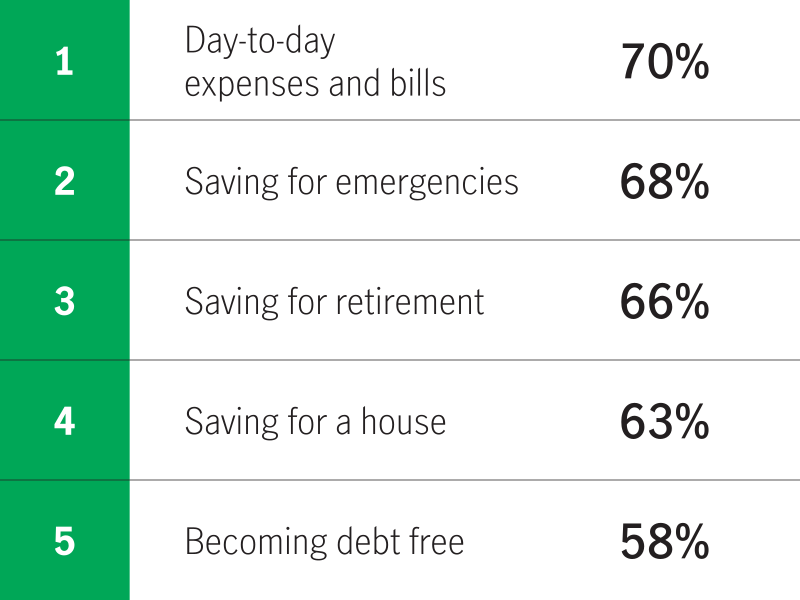
1 Paying day-to-day expenses and bills
The cost of everyday living can leave you feeling like there’s nothing left for fun or saving for your future.
“I have a great job and another one on the side, which allows me to cover housing, food, and transportation. However, anything beyond those essentials requires careful consideration.”1 -Age 27
A budget can help you flip the script. Budgeting doesn’t mean cutting out everything you enjoy. It’s simply a way to understand what’s coming in and what’s going out so you can make intentional choices with your money. Here are some relatively quick fixes if you want to spend less money:
- Look for ways to reduce expenses—Could you cut back on food deliveries, coffee runs, or extra streaming services?
- Shop around for better deals—A different cell phone or internet provider might offer the same service for less.
- Cancel what you don’t use—Apps, memberships, or subscriptions you rarely touch can quietly drain your budget.
- Take advantage of digital coupons and discounts—Coupons aren’t old school. They’re an easy way to pay less.
Taking small steps like these can help free up money for your other financial priorities.
2 Saving for emergencies
Once your day-to-day expenses are under control, it’s time to build a safety net. An emergency savings fund can help keep major car repairs, medical bills, or sudden job loss from throwing your financial life off course.
“If I lose a tire, I won't be able to afford a replacement or a tow truck.”1 -Age 26
How much should you save for unexpected expenses? It depends on your situation, but a common goal is three to six months of living expenses. If that feels impossible right now, that’s okay. Emergency savings is something you build gradually. What matters most is getting started.
- Set a realistic savings goal and deadline—For example, in six months, I’d like to have $1,000 in savings.
- Choose an amount to save from each paycheck—Start with what you can manage, even $25 per paycheck can add up over time.
- Put your savings on autopilot—Having the money deposited directly into your emergency fund removes the temptation to use it for something else.
3 Saving for retirement
Once your expenses and emergency savings are on track, you can focus on your future financial independence. You may have heard your friends talking about coasting to retirement. This idea is all about saving as much as you can now so your money has time to grow. The more you save today, the less you may need to put aside later to enjoy the life you want.
“I want to set myself up for the future, so I don’t have to work 40+ hours until I’m 70.”1 -Age 27
Here are some simple steps to help you build your retirement savings:
- Enroll in your employer’s retirement plan—Choose a savings rate that fits your budget.
- Gradually increase your contribution rate—A 1% increase each time you get a bonus or raise can make a difference over time.
- Save enough to get the full employer match, if offered—Matching contributions can help you reach your savings goal faster.
- Consider a traditional or Roth IRA—These accounts can help supplement your retirement savings, giving you even more money for the future you want.
4 Saving for a house
On top of saving for emergencies and retirement, you may be trying to save for a house—one of life’s major milestones. Even with a steady income, this goal can be challenging.
“My biggest concern is saving money to buy a home and bigger assets. I make decent money for my age, but still feel like saving is difficult.”1 -Age 26
The good news is that you don’t need to pay the full cost of a house up front. That’s what mortgages are for. Instead, focus on saving for the down payment to reduce how much you may need to borrow.
These steps can help you build your house fund:
- Make a list of your must-haves—Decide what features are essential in a house.
- Research real estate values—Find out how much the homes with your must-haves cost in your area.
- Set a down payment goal and deadline—For example, I want to save $15,000 by the end of 2029.
- Review your budget—Choose an amount to save from each paycheck.
- Put your savings on autopilot—Set up automatic deductions to make saving easier.
5 Becoming debt free
Tackling your debt is another worthy but often overwhelming goal. Depending on how much you owe, you may feel like you’ll never dig yourself out, but don’t despair. There are things you can do to take control of your debt.
“I’m concerned about paying off my debt (car loan and student loans). I’m doing well and making a dent; it just takes time.”1 -Age 25
- Create a list of what you owe—Seeing all your debts in one place (balances, interest rates, monthly payments) can help you decide which one to tackle first.
- Put payments on autopilot—Automating debt payments can keep you from spending that money elsewhere.
- Be mindful with credit cards—Setting a monthly spending limit can help you pause before charging something you don’t really need.
And remember, borrowing money isn’t necessarily a bad thing. The key is to avoid taking on too much—or unnecessary—debt.
Building your financial independence, one step at a time
Now that you understand what it means to turn large goals into smaller, more manageable steps, it’s time to try it for yourself. Don’t worry if you slip back into old habits. Crushing your finances is all about making steady progress.
FAQs
What’s an emergency fund, and why do financial professionals recommend one?
An emergency fund is money you save for unexpected expenses, such as car repairs or medical bills. Financial professionals recommend it because it can help you pay bills, keep long-term savings plans on track, and reduce stress.
How does compound interest work, and why does it matter for young investors?
Compound interest means your money earns interest, then earns interest on that interest too. For young investors, starting early gives their money more time to potentially grow, so even small savings can become larger over many years.
What are common debt repayment strategies, and how do they differ?
Common debt payoff strategies include the snowball and avalanche methods. The snowball method focuses on paying off small debts first, while the avalanche method targets high-interest debts first. One method isn't necessarily better—it depends on your situation and preferences.
What are common ways to budget your money?
Common budgeting methods include the 50/30/20 rule, which splits money into needs, wants, and savings; zero-based budgeting, where every dollar is planned; and pay-yourself-first, which prioritizes saving before spending. No method is necessarily better—it depends on your goals and personal preferences.
Important disclosures
Important disclosures
This content is for general information only and is believed to be accurate and reliable as of the posting date, but may be subject to change. It is not intended to provide investment, tax, plan design, or legal advice. Please consult your own independent advisor as to any investment, tax, or legal statements made.
MGR0511265456780